Trial Skills Fundamentals

Trial Skills Fundamentals
Join to access free
Professional members and above get unlimited live and OnDemand CLE, and Sustainer members get 25 OnDemand hours.
Non-member price Original price was: $935.Current price is: $500.

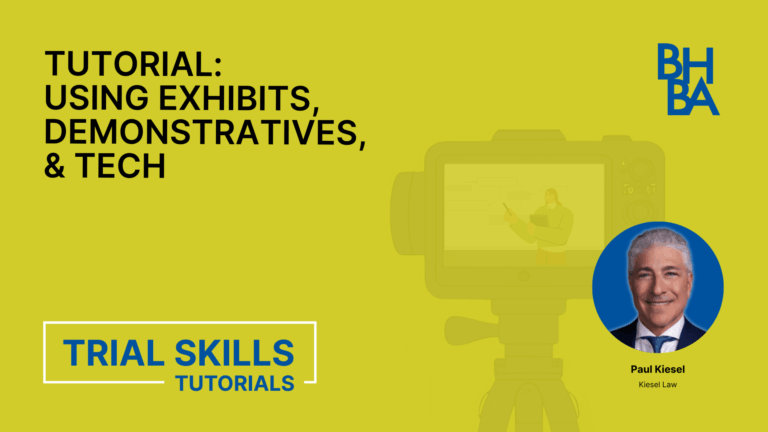
Trial Skills: Using Exhibits, Demonstratives, and Technology at Trial

This program covers the strategic and practical aspects of using exhibits, demonstratives, and technology in the courtroom. It will explain various types of exhibits, their potential to enhance your case, and strategic considerations for their use, along with pre-trial preparation. The program details techniques for incorporating exhibits during examinations, and moving them into evidence. Additionally, it explores how to strategically use technology to enhance evidence presentation and overall trial strategy.

Ask the speaker a question. Email and be sure to include the program name in the subject line.

Trial Skills: Voir Dire - The Art, Science, and Psychology of Jury Selection

Explore the art, science, and psychology of jury selection. This program covers the logistics of jury selection, including peremptory challenges, excusal for cause, as well as the intangible art of formulating and selecting an “ideal” jury panel. Learn how to create and use a jury selection chart to track jurors during voir dire, identify desirable and undesirable jurors, and use voir dire to introduce and further your theme and theory of the case before the trial even begins.

Ask the speaker a question. Email and be sure to include the program name in the subject line.

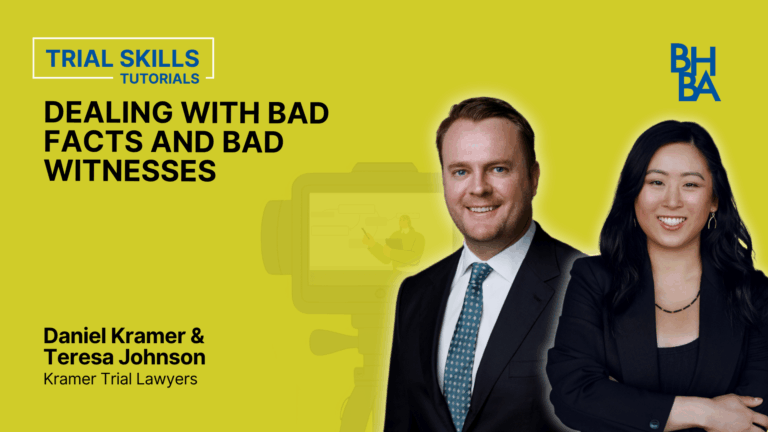
Trial Skills: Dealing with Bad Facts and Bad Witnesses

You may not be able to choose your clients, witnesses, or the facts of your case. However, how you handle less than desirable circumstances is what separates competent trial attorneys from legendary ones. This program will teach you effective techniques and strategies of how to deal with these "bad" facts and witnesses, leading up to trial, in voir dire, opening and on the witness stand. You will learn methods to diffuse the negative impacts of undesirable facts and testimony, and handle bias or perception problems of clients and witnesses.

Ask the speaker a question. Email and be sure to include the program name in the subject line.

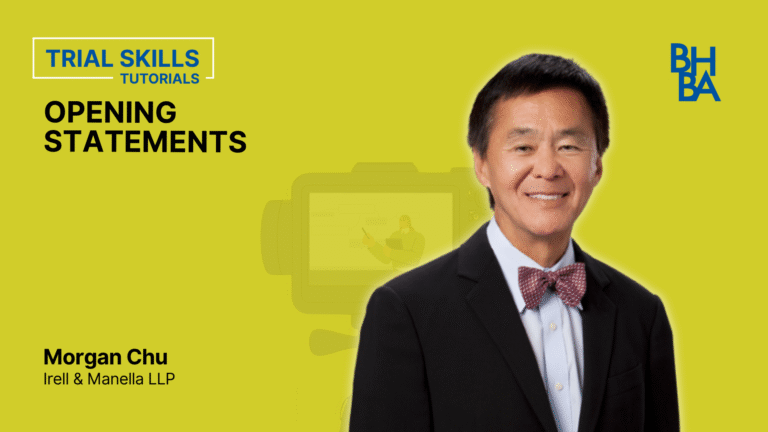
Trial Skills: Crafting Effective Opening Statements

Learn how to take your opening statement from a perfunctory outline of evidence, to a persuasive foundation for your client's story. This program will cover the practical, theoretical, and creative aspects of crafting an opening statement that grabs the jury from the very first moments of trial. It will address the goals of the opening statement, differentiating facts from arguments and what can be included. Attendees will learn techniques to immediately engage the jury and incorporate their themes, as well as how to structure and organize content for the best impact, determining what to include and what to exclude.

Morgan Chu, Partner, Irell & Manella LLP

Trial Skills: Direct and Re-Direct Examination of Lay Witnesses and Experts

Gain expertise in the direct examination of lay witnesses and experts. This program covers the mechanics and art of examining your witnesses, including preparation and identifying key facts to support your case theories and themes. Learn how to incorporate deposition testimony and discovery responses into your examination outlines, effectively prepare your witness, and plan and structure your questioning. Additionally, this program will explore various examination techniques to ensure you elicit clear and persuasive testimony from every witness.

Trial Skills: It's Not Just What You Say, But How You Say It

Learn how to present your case in an authentic, trustworthy, and captivating manner. This program covers essential public speaking skills and effective physical presentation techniques to ensure your message resonates with your audience in the courtroom and maintains their engagement

Ask the speaker a question. Email and be sure to include the program name in the subject line.

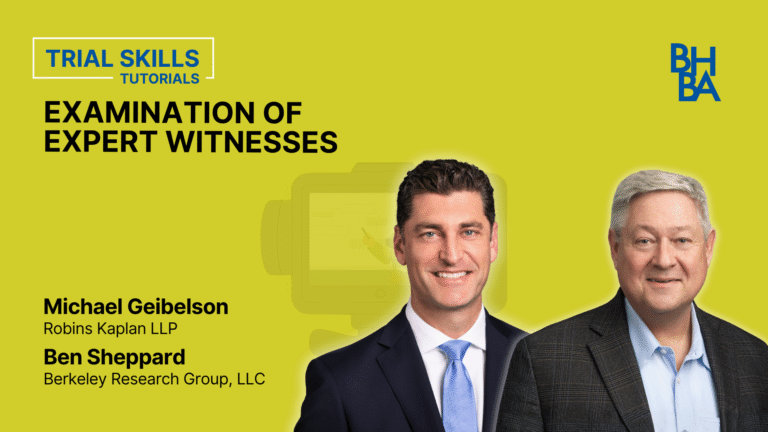
Trial Skills: Examination of Expert Witnesses - Direct and Cross

This program covers the essential guidelines for examining expert witnesses in court. It covers establishing the expert's qualifications, ensuring their testimony is relevant and credible, and laying a strong foundation for their opinions. For direct examination, it includes effective questioning strategies and addressing potential biases. For cross-examination, the program provides techniques to challenge the expert's qualifications, methodologies, and conclusions. It discusses impeachment methods and the implications of the Sanchez ruling on hearsay evidence.

Ask the speaker a question. Email and be sure to include the program name in the subject line.

Michael A. Geibelson, Managing Partner – California Offices, Robins Kaplan LLP

Trial Skills: Avoiding Trial Altogether - How to Position and Negotiate Your Case for the Best Settlement

Discover key strategies to effectively position your case for the best possible resolution and avoid trial altogether. This program covers how to assess and leverage case strengths and weaknesses, set your client's expectations, and negotiate a resolution that meets the interest of all parties. Discover how to present your case during negotiations and ADR sessions, to avoid a costly and time consuming trial.

Ask the speaker a question. Email and be sure to include the program name in the subject line.

Trial Skills: The Art and Science of Closing Arguments

A master class on closing arguments presented by distinguished trial attorneys from both sides of the aisle. This program will cover the practical, theoretical, and creative aspects of crafting a winning closing argument, including:

- Logistics for when and how to create your argument
- Strategic organization and structure techniques
- Use of theories and themes to unify your case and create persuasive arguments
- Methods for determining what arguments and content to include and what to omit
- Unique considerations for each side
- Rebuttals
- Objections
- Limitations on closing arguments

PLUS: Our panelists will each provide a mini closing argument to demonstrate all points covered during the program.

Ask the speaker a question. Email and be sure to include the program name in the subject line.

Ricardo Echeverria, Trial Attorney, Shernoff Bidart Echeverria LLP (Plaintiff Perspective)
Alice Chen Smith, Managing Partner, Yoka | Smith, LLP (Defense Perspective)

Trial Skills: There Are No Small Parts - Working With Second Chair and Litigation Support Staff During Trial

Explore the unique and vital roles of second chairs, and support professionals in trial settings. Learn how to best utilize everyone’s unique skills to ensure a cohesive and efficient trial team, maximizing the contributions of each member to strengthen your case and streamline trial proceedings. Plus, learn everything that you should include in your trial binder, and how to organize it, to ensure the most effective and comprehensive trial resource is right at your fingertips.

Ask the speaker a question. Email and be sure to include the program name in the subject
line.

Trial Skills: The Courtroom Closes at Five But Your Day is Far From Over

This program will teach you what you and your team should be doing at the conclusion of each trial day to maintain an edge. Learn the mechanics of rush transcripts and how to keep track of developing theories. Understand necessary adjustments to examinations, types of motions that might arise as the trial progresses, and how to develop and tweak closing arguments as the trial unfolds. Maximize your team's efficiency and effectiveness with these essential end-of-day strategies.

Trial Skills: Cross-Examination and Impeachment

This program covers the critical aspects of cross-examination and impeachment, focusing on strategy, permissible scope, and organization. Learn how to identify what to include and exclude in your questioning, and understand the techniques used to achieve specific objectives. The session will also explore maintaining control during cross-examination, different types of impeachment, and the methods for effective impeachment questioning.

Trial Skills: Pitfalls & Red Flags to Avoid in Trial

This program offers valuable insights into the top mistakes and pitfalls attorneys should avoid at trial, often only learned through firsthand experience. Benefit from the experiences of others and steer clear of these practical, professional, and tactical pitfalls to enhance your trial performance.

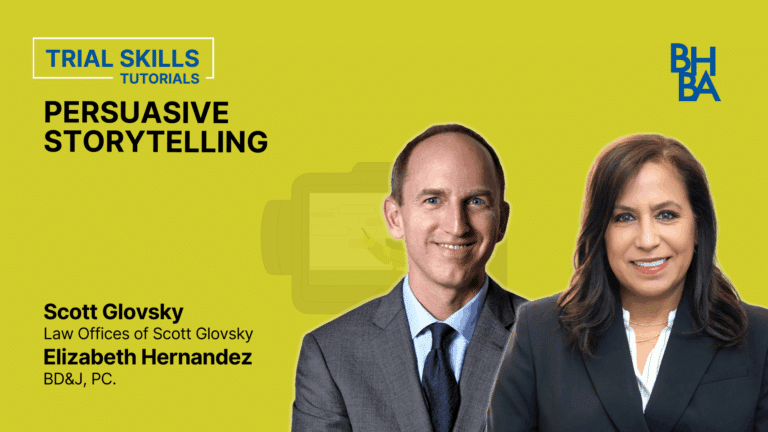
Trial Skills: Persuasive Storytelling

This program offers valuable insights into the top mistakes and pitfalls attorneys should avoid at trial, often only learned through firsthand experience. Benefit from the experiences of others and steer clear of these practical, professional, and tactical pitfalls to enhance your trial performance.

Trial Skills: Expert Witness Evidence and Testimony

You've completed your expert discovery but now what do you do with it at trial? This program will explore the critical strategic consideration necessary when preparing your gathered evidence for trial including:

- How to narrow down the evidence to present;
- How to avoid bogging down the trier of fact in minutia;
- The type of evidence to use and its most effective method of presentation;
- What you need to include to lay foundation for the evidence you choose.

The program will then explore the practical and mechanical aspects of using this evidence at trial:

- How to get your documents into evidence;
- Appropriate examination for building expert credibility;
- Mechanics of impeachment,
- And more!

Trial Skills: Objection! The Why, How, and When of Making Objections at Trial

This program examines the critical aspects of objections in trial practice, including when to make objections, how to respond to and argue objections, and the mechanics of objecting to preserve the record. Participants will gain practical strategies for effective objection handling, ensuring procedural compliance, and safeguarding appellate rights.

Trial Skills: Types of Evidence and Laying Foundation

This program provides an overview of major evidence groups in civil and criminal practice, focusing on admissibility, types of evidence, and laying the foundation. Participants will learn strategies for effectively navigating evidentiary rules, identifying what evidence to include or exclude, and understanding techniques for achieving specific litigation objectives. The session will also explore the practical methods for establishing foundation for different categories of evidence, and will address admissibility challenges.

About this package

Trial Skills Fundamentals brings together top trial attorneys to teach the essential subjects every trial attorney must master to succeed in the courtroom.

The series guides you from trial preparation, to structuring your witnesses to create persuasive storytelling, to delivering compelling closing arguments, and everything in between. Along the way, you will learn how to strategize and execute key trial elements, including voir dire, witness examinations, collaboration with a second chair and support staff, preparing for the next trial day after court adjourns, avoiding both common and uncommon pitfalls, and addressing unfavorable facts and witnesses. This series provides all the tools you need to build a strong foundation in trial skills.

This OnDemand CLE package earns 20.75 hours of credit in California. It includes 17 programs.
Award-Winning. Nationally Recognized. Always Relevant.

Named Best CLE Provider and Best Online CLE Provider by The Recorder in both 2025 and 2026. Built for lawyers, by lawyers, to keep you ahead.
The Recorder Best of 2026, CLE Provider The Recorder Best of 2026, Online CLE Provider The Recorder Best of 2025, CLE Provider The Recorder Best of 2025, Online CLE Provider

Stream anywhere

Watch on your phone, tablet, or computer, whenever it fits your schedule.

Certificate in minutes

Your certificate is emailed automatically and saved in My BHBA+.

Track your credits

My BHBA+ shows your credits, deadlines, and progress in one place.