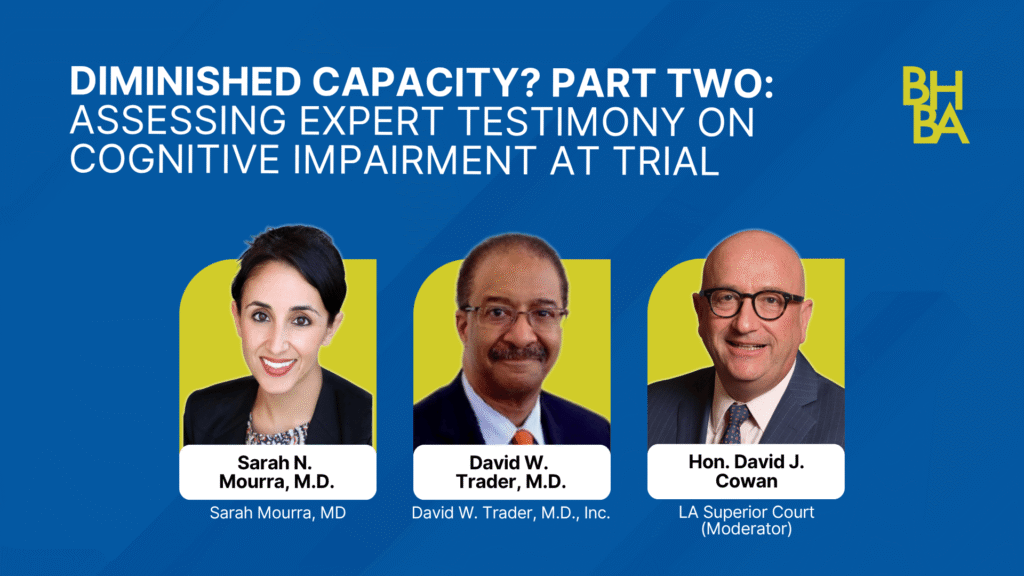
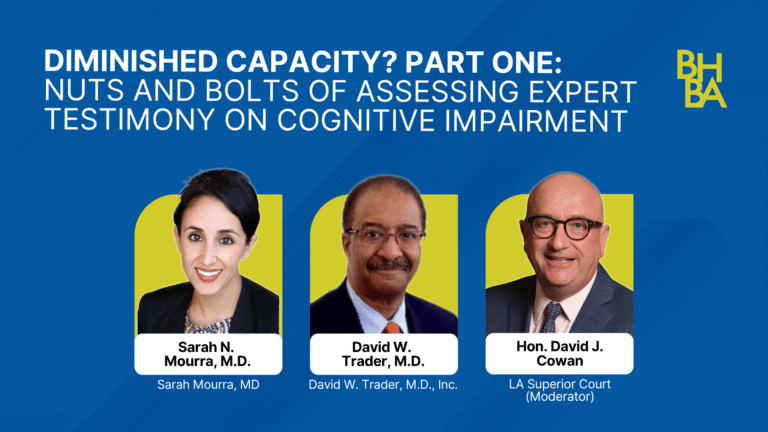
Building on the medical framework established in Part 1, this session turns to the practical realities of preparing and presenting expert testimony on cognitive impairment and capacity in the courtroom. Medical experts return with a moderator to address how experts analyze medical records, structure written reports versus providing oral testimony, and scope their opinions appropriately. The panel explores the critical distinctions between testamentary and contractual capacity, the risks of straying into areas of undue influence or elder abuse that may be beyond their expertise, and how the Sanchez decision affects an expert's ability to evaluate a treating physician's conclusions without personally examining the patient. The discussion also covers what lawyers often overlook when working with a medical expert and what to look for when assessing the other side's expert on cognitive issues.
This OnDemand CLE program earns 1.25 hours of General credit in California. It aired May 28, 2026 and features Hon. David J. Cowan, Sarah Mourra M.D., and David W. Trader, M.D..
Named Best CLE Provider and Best Online CLE Provider by The Recorder in both 2025 and 2026. Built for lawyers, by lawyers, to keep you ahead.
Watch on your phone, tablet, or computer, whenever it fits your schedule.
Your certificate is emailed automatically and saved in My BHBA+.
My BHBA+ shows your credits, deadlines, and progress in one place.