
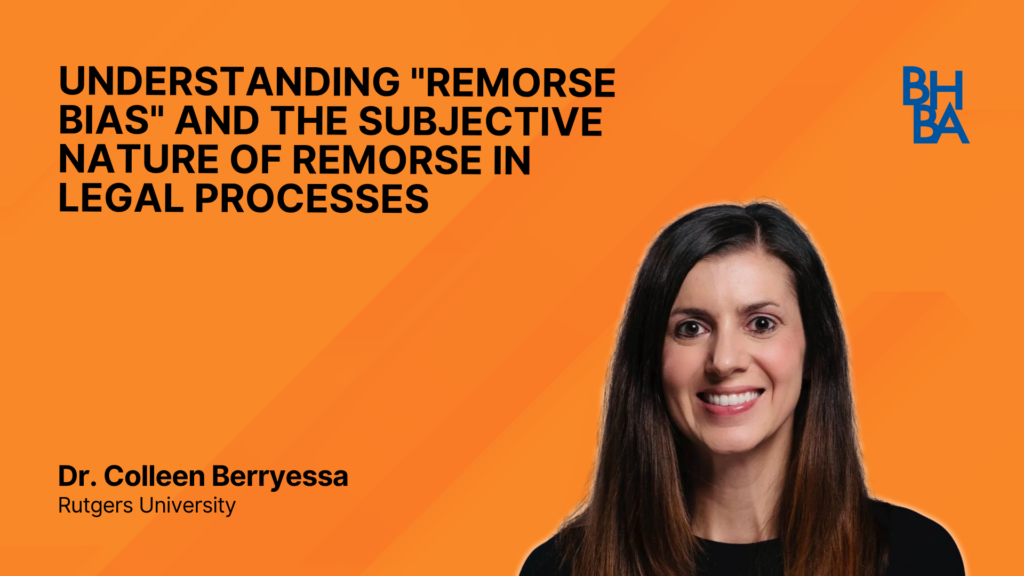
Understanding "Remorse Bias" and the Subjective Nature of Remorse in Legal Processes
About this program
Research shows that legal decision-makers often weigh a defendant's expressions of remorse as highly valuable when estimating character and future behavior during the legal process, particularly during sentencing. Yet assessing remorse in court is a subjective process heavily influenced by the backgrounds of decision-makers and defendants, which fosters and reinforces implicit bias. This phenomenon, known as remorse bias, can lead decision-makers to misread and discount a defendant's true remorse as disingenuous. This can produce adverse outcomes for some defendants in the legal system, especially for those with personal characteristics that are commonly socially stereotyped or quite different from the backgrounds of decision-makers. Attorneys will leave with a clear understanding of remorse bias, its impacts on legal decision-making, and practical recommendations for navigating remorse in court settings.
This OnDemand CLE program earns 1 hour of Implicit Bias credit in California. It aired June 12, 2026 and features Dr. Colleen Berryessa.

More Inclusion CLEs
Unmasking Judicial Bias: Rhetoric, Neutral Reasoning, and Disparate Impact in the Courtroom

Implicit Bias in Juror Decision-Making: Sexual Orientation, Attractiveness, and
From Awareness to Action: Confronting Physical Disability Bias in the Legal Prof
Confronting the Assault on the Independence of the Legal Profession & Judiciary

Briefs, Briefings & Brain Fog: Menopause in the Legal Lane

Implicit Bias Toward Psychiatric Disabilities

The Gender Equity Brief

Blind Spots The Power of Perception
Named Best CLE Provider and Best Online CLE Provider by The Recorder in both 2025 and 2026. Built for lawyers, by lawyers, to keep you ahead.




Stream anywhere
Watch on your phone, tablet, or computer, whenever it fits your schedule.
Certificate in minutes
Your certificate is emailed automatically and saved in My BHBA+.
Track your credits
My BHBA+ shows your credits, deadlines, and progress in one place.