
At 8:30 on a Monday morning, the courtroom is already full. Clients sit anxiously in the gallery. Opposing counsel shuffles through binders. The judge reviews the docket with quiet efficiency. At the counsel’s table, an attorney rises to argue a motion that may determine the direction of a case or the future of a client’s livelihood.
Scenes like this occur every day across California courts. Lawyers are trained to perform under pressure. They analyze facts quickly, respond to arguments in real time, and make decisions that can affect families, businesses, and individual liberty. Professional composure is expected. Emotional reactions are contained. Performance must remain sharp regardless of the circumstances.
Yet behind that professionalism lies a reality that is rarely discussed openly. Many attorneys are operating under sustained levels of stress that affect concentration, emotional regulation, and long-term health. The cumulative effect of high-stakes advocacy, demanding clients, and relentless workloads can place extraordinary pressure on the human nervous system.
For California lawyers, resilience is not simply a personal quality. It is closely connected to professional competence. The California Rules of Professional Conduct 1.1 state, “A lawyer shall not intentionally, recklessly, with gross negligence, or repeatedly fail to perform legal services with competence. Competence shall apply the (1) learning and skill, and (2) mental, emotional, and physical ability reasonably necessary for the performance of such service.” When sustained stress erodes focus or judgment, the consequences extend beyond personal well-being. They can affect client representation, ethical compliance, and the profession’s reputation.
The modern legal profession requires a deeper conversation about resilience. Endurance alone is not enough. Sustainable performance requires strategies that protect cognitive clarity, emotional balance, and professional leadership throughout a demanding career.
The Hidden Pressures of Legal Practice
Attorneys encounter emotionally charged situations regularly. Criminal defense lawyers review reports describing violence and loss. Family law attorneys work with clients experiencing divorce, custody disputes, and financial uncertainty. Civil litigators analyze testimony that often involves deeply personal experiences. Transactional lawyers manage high-value agreements in which a small oversight can have significant consequences.
Each of these responsibilities carries weight. Over time, the accumulation of conflict, deadlines, and responsibility can create sustained psychological pressure.
Many attorneys internalize the belief that stress is simply part of professional life. Hard work and long hours are frequently viewed as signs of dedication. However, neuroscience and occupational research suggest that prolonged stress can gradually affect the brain systems responsible for attention, emotional regulation, and strategic thinking.
Statistics on Lawyer Mental Health
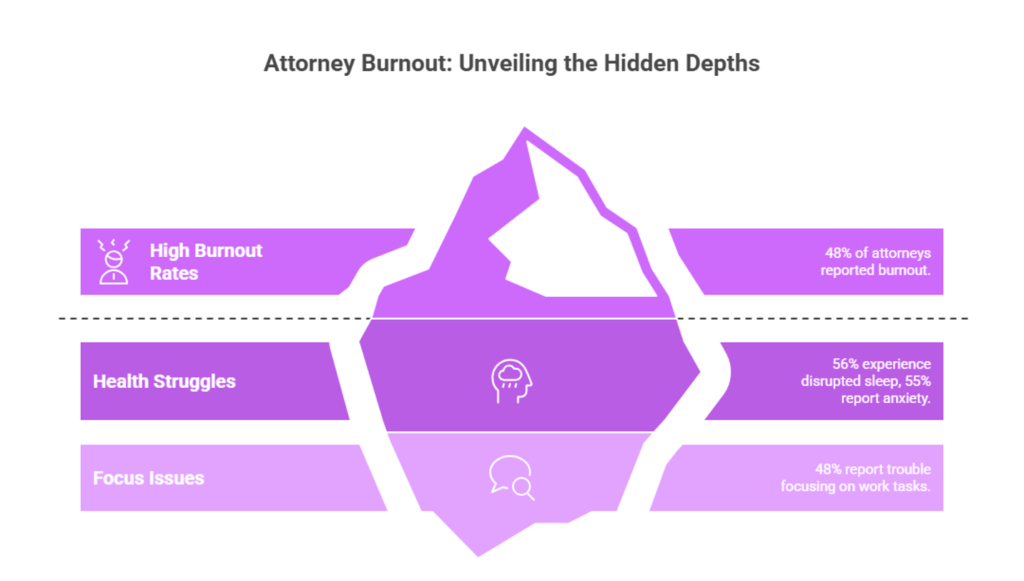
Source: 2024 Attorney Well-Being Report: The Divide Between Health & the Legal Industry
Empirical research confirms that lawyer well-being deserves serious attention. Studies examining thousands of practicing attorneys have revealed that lawyers experience elevated rates of depression, anxiety, and problematic alcohol use compared with many other professions.
Research also shows that a large percentage of attorneys report symptoms associated with burnout. Emotional exhaustion, declining professional satisfaction, and chronic fatigue appear frequently in surveys of legal professionals.
Younger attorneys and those working in high-pressure practice environments often report the highest stress levels. Long hours, demanding clients, and constant digital communication contribute to the sense that work never fully ends.
Sleep disruption is another common factor. When attorneys consistently sacrifice rest in order to meet deadlines, the brain loses opportunities for cognitive recovery. Over time, this can affect memory, concentration, and emotional stability.
These statistics do not suggest that lawyers lack resilience. Instead, they highlight the demanding conditions under which legal professionals operate. Acknowledging these realities allows the profession to adopt strategies that support sustainable excellence.
Narrative Example One: A High Stakes Hearing
Consider the experience of a litigation attorney preparing for a contested hearing involving allegations of abuse. For several weeks, the attorney reviewed police reports, medical records, and witness statements describing traumatic events. Preparation required long evenings organizing exhibits and anticipating arguments from opposing counsel.
The morning of the hearing, the attorney arrived at court carrying several binders filled with evidence. The courtroom atmosphere was tense. Clients were anxious, and the issues at stake were deeply personal.
When the judge called the matter, the attorney began presenting arguments clearly and effectively. Yet internally, she noticed that maintaining focus required greater effort than usual. Her mind felt fatigued after weeks of immersion in distressing material. When opposing counsel raised unexpected objections, she felt a moment of irritation she hadn’t expected.
After the hearing, she reflected on the experience. The issue was not preparation or professional ability. The issue was cumulative exposure to emotionally intense information combined with sustained workload pressure.
Stories like this appear frequently in the legal practice. Attorneys often absorb the emotional weight of their cases while maintaining professional composure. Without intentional recovery, the nervous system can remain in a state of constant activation.
Understanding the Neurobiology of Stress
Understanding how the brain responds to pressure can transform the conversation about resilience.
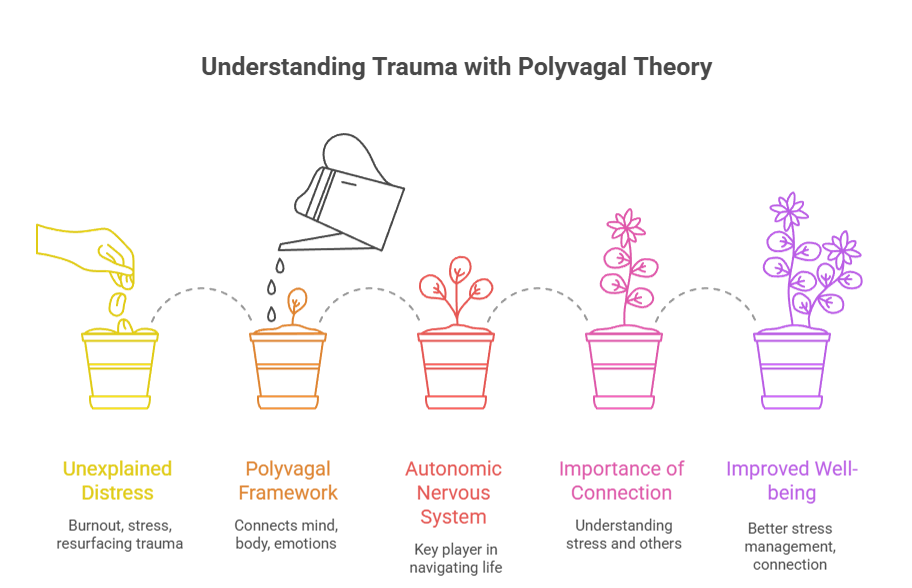
Polyvagal Theory, developed by neuroscientist Dr. Stephen Porges, explains how the autonomic nervous system continuously scans the environment for signals of safety or threat. When danger is perceived, the body activates protective responses designed to support survival.
The autonomic nervous system organizes the body’s response to safety and threat. The Polyvagal Theory has three adaptive neural/physiological states. These are adaptive responses that shift in response to cues of safety or threat.
The ventral vagal activation state supports safe, social engagement, connection, and empowerment. The sympathetic activation state narrows the focus for action to the fight-or-flight state. We become mobilized, agitated, and frantic. The dorsal vagal activation state is characterized by freezing, shutting down, becoming numb, and collapsing.
In high-pressure professions, these responses may remain active for extended periods. Some individuals experience persistent alertness and anxiety. Others experience fatigue, emotional withdrawal, or difficulty concentrating.
When the nervous system remains activated, the prefrontal cortex becomes less effective. This area of the brain governs complex reasoning, impulse control, and strategic thinking. These are the same cognitive abilities attorneys rely upon for legal analysis and advocacy.
Resilience requires more than determination. It requires practices that allow the nervous system to return to a balanced state.
How Can This Affect You as an Attorney?
An attorney in a ventral vagal state may have a calm voice, clear thinking, and relational cues. An attorney who sympathetically activates may be incisive but also more likely to interrupt or lose nuance. Their speech may be rapid, increase tension, and narrow attention. They may be useful in advocacy, but they may miss details or escalate conflict.
An attorney in dorsal vagal may have slow speech, blank effects, and memory gaps. They may have breathing changes, facial tightness, pacing, and rigidity, which increases the risk of reduced competence in hearings, depositions, and decision-making. A dorsal-vagal shutdown can look like a sudden freeze during cross-examination and is more likely when someone is overwhelmed.
An attorney suffering from burnout and trauma exposure may be unable to meet their ethical duties. Fatigue leads to poor decision-making in high-stakes cases. Cynicism destroys the trust needed for effective communication. Cognitive fog compromises competence. This is not about being weak. This is about recognizing that trauma is a professional hazard that must be mitigated to maintain an attorney’s license and effectiveness.
Deep breathing can help when an attorney is in a state of sympathetic nervous system activation. The 4-4-6 breathing technique is a simple relaxation exercise that involves inhaling through the nose for 4 seconds, holding the breath for 4 seconds, and exhaling through the mouth for 6 seconds. This practice activates the body’s natural relaxation response, helps reduce stress and anxiety, and can be done anywhere. Repeat for four cycles. Additionally, there are many different variations of this technique.
Narrative Example Two: Preparing for Trial
Another example illustrates how chronic stress can develop during major litigation.
A senior attorney was preparing for a complex trial involving allegations of financial fraud and extensive documentary evidence. Months of preparation required constant strategy meetings, expert witness coordination, and document review.
As the trial date approached, the attorney worked late into the night reviewing exhibits and refining arguments. Sleep gradually became irregular. Meals were rushed, and exercise disappeared from the weekly routine.
During one preparation meeting, the attorney realized that recalling specific details from documents required greater concentration than usual. Information that had been thoroughly studied days earlier felt harder to retrieve quickly. The attorney also noticed growing irritability during discussions with colleagues.
These changes were not signs of declining intelligence or commitment. They reflected the predictable effects of sustained stress on the brain.
After the trial, the attorney recognized the importance of building more sustainable work patterns, establishing boundaries, and incorporating self-care. Regular recovery periods, physical movement, and structured breaks improved clarity and energy.
Experiences like this demonstrate that even highly accomplished attorneys can be affected by chronic stress.
Resilience as an Ethical Imperative
For attorneys, resilience intersects directly with professional responsibility.
Rule 1.3 of the California Rules of Professional Conduct requires diligence in representation and states, “A lawyer shall not intentionally, repeatedly, recklessly, or with gross negligence fail to act with reasonable diligence in representing a client. Reasonable diligence shall mean that a lawyer acts with commitment and dedication to the interests of the client and does not neglect or disregard, or unduly delay, a legal matter entrusted to the lawyer.”
When unmanaged stress interferes with concentration or judgment, the issue becomes both professional and personal. Lawyers who maintain cognitive clarity and emotional stability are better equipped to serve clients effectively.
As a result, many legal organizations now emphasize lawyer well-being as an important component of ethical practice.
A Trauma-informed Framework for Legal Professionals
Trauma-informed frameworks offer one approach for addressing these challenges.
These systems recognize that repeated exposure to stress influences behavior, communication, and performance. Instead of viewing stress responses as personal weakness, trauma-informed approaches focus on creating environments that support resilience and recovery.
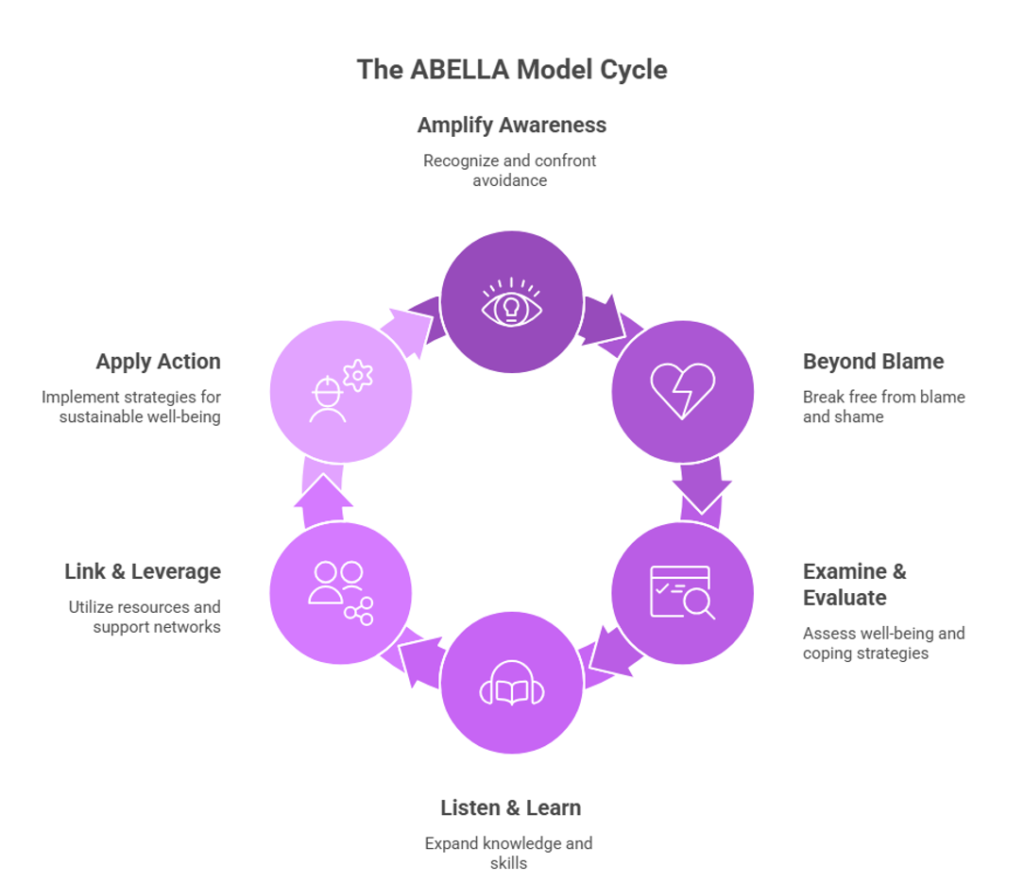
The ABELLA Model™ provides a structured, six-step framework specifically designed for high-stress professional environments. Drawing from neuroscience, leadership development, and organizational psychology, the model offers practical strategies that help professionals maintain performance under pressure.
Core principles include awareness of stress responses, development of nervous system regulation skills, leadership practices that promote psychological safety, and organizational cultures that support sustainable productivity.
Practical Strategies for Attorneys
The ABELLA Model six-step framework:
- Amplify Awareness
- Attorneys must confront avoidance. By accepting and becoming aware of the problems, one must be able to “face it, in order to fix it.”
- Beyond Blame
- Break free from the blame and shame and the “suck it up” mentality. By shifting from blame and shame to accountability, professionals empower themselves to seek solutions and support.
- Examine and Evaluate
- Finding the truth requires a thorough and honest self-assessment of your mental, emotional, and physical well-being. This critical evaluation helps attorneys understand the risk of inaction, such as work errors, strained relationships, and declining health, and motivates them to pursue positive change.
- Listen and Learn
- Now that the “light is on”, this step helps attorneys identify triggers and discover effective coping strategies through ongoing education and learning.
- Link and Leverage
- Link to and leverage available resources such as peer support, supervision, professional help, and organizational tools to strengthen resilience and well-being and create a sustainable foundation for personal and professional development.
- Apply Action
- By consistently applying trauma-informed strategies in both their personal and professional life, attorneys become role models and resources for others in the legal profession. Applying action means not only thriving personally but also contributing to the well-being of colleagues and the legal community, embodying the principles of trauma-informed leadership and advocacy.
By following these steps, attorneys can begin strengthening resilience.
Develop awareness of stress signals such as fatigue, irritability, and difficulty concentrating. These signals often indicate that the nervous system is operating under sustained pressure.
Incorporate brief regulation practices throughout the workday. Controlled breathing, stretching, or short walks can help restore physiological balance.
Establish boundaries around workload and recovery time. Sustainable performance requires intentional periods of rest.
Cultivate supportive professional relationships that encourage open dialogue about challenges within legal practice.
Invest in professional development that strengthens leadership, emotional intelligence, and resilience skills.
Leadership Responsibility in Law Firms and Organizations
The ABELLA Model six-step framework:
- Amplify Awareness
- Organizations can support this step by fostering open communication and creating a culture that encourages acknowledging challenges rather than stigmatizing them.
- Beyond Blame
- Organizations can establish open dialogue between team members and leaders that allows discussions about unmanageable workloads and unreasonable client demands, and enables team members and leaders to work together to resolve problems rather than “deal with it.”
- Examine and Evaluate
- Organizations can implement regular well-being check-ins and provide access to confidential self-assessment tools to help staff monitor their health.
- Listen and Learn
- Organizations can foster continuous learning by offering workshops, training sessions, and other resources on trauma-informed care and resilience building.
- Link and Leverage
- Organizations can provide access to employee assistance programs, peer support groups, one-on-one, team, or group coaching, and other resources.
- Apply Action
- Organizations can reinforce this step by recognizing and rewarding resilience, facilitating mentorship programs, and modeling trauma-informed leadership at all levels.
Resilience is not solely an individual responsibility. Law firm leadership plays an important role in shaping workplace culture.
Organizations that support sustainable performance often establish realistic workload expectations, encourage communication about stress, and provide training that equips attorneys with tools for managing pressure.
These environments enable attorneys to maintain clarity, stability, and professional engagement.
A Cultural Shift in the Legal Profession
The legal profession is increasingly recognizing that lawyer well-being supports the integrity of the justice system. Bar associations, courts, and legal organizations are expanding conversations about resilience and mental health.
This cultural shift reflects a growing understanding that attorneys perform best when their professional environments support both competence and well-being.
Take-aways
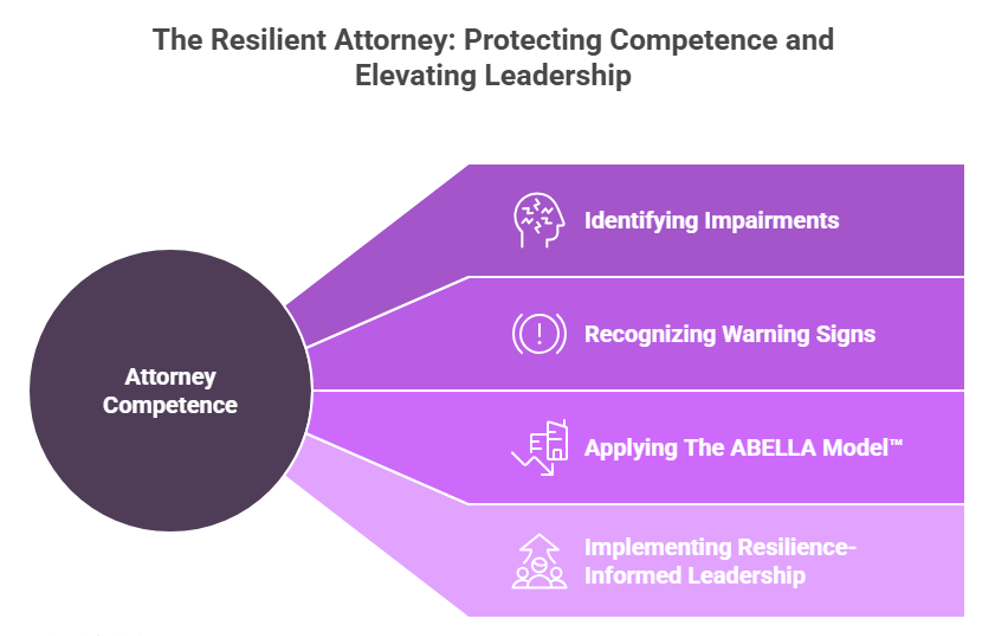
Law firms and legal organizations have an opportunity to lead this transformation.
Through keynote presentations, leadership development programs, and trauma-informed training initiatives, organizations can equip attorneys with strategies that protect competence and strengthen long-term performance.
A Call to Action for the Legal Community
My work focuses on supporting legal professionals as they develop these capabilities. I present keynote programs such as “The Resilient Law Firm: A Trauma-informed Framework for Retaining Top Talent and Sustaining Peak Performance.” I also provide one-on-one, team, and group coaching, as well as full-day training and partner retreats, that strengthen leadership and resilience within legal organizations.
These programs draw on the principles explored in my books, The ABELLA Model: Leading High-Stress Professionals with Trauma-Informed Practices and Resilient Lawyering: A Practicable Guide to Sustainable Well-Being in Law.
Organizations that invest in resilience strengthen the future of the legal profession.
For more information about speaking engagements, coaching programs, and professional training opportunities, visit www.LitaAbella.com, connect with me on LinkedIn, or contact me at .