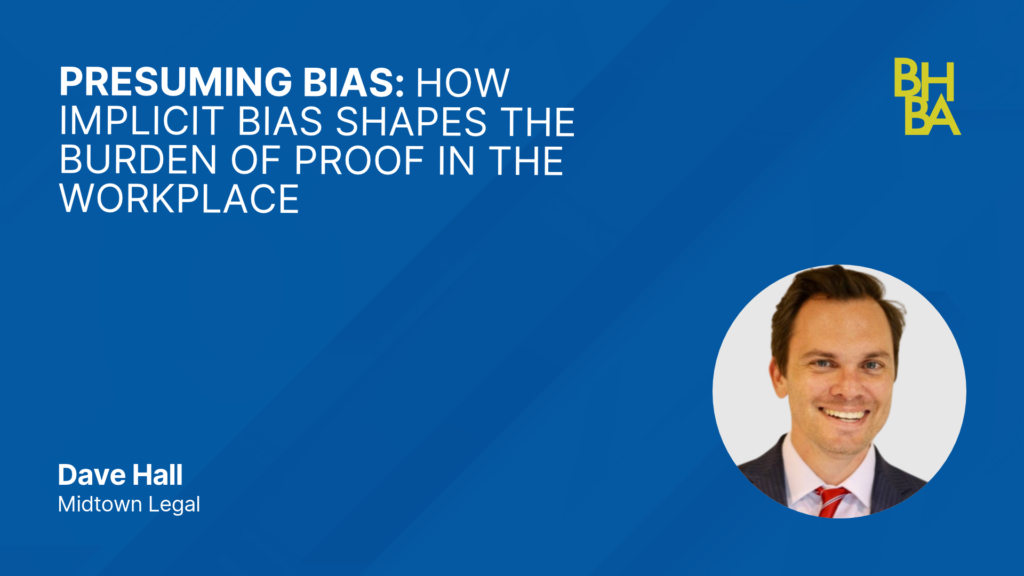
Workplace discrimination doesn't work the way it used to. Much of it now runs on implicit bias and structural patterns rather than open hostility, but the law hasn't kept pace. Title VII's burden-of-proof framework still expects employees to come forward with direct evidence of discriminatory intent. The mismatch is the problem, and it's a problem that the science on how bias actually operates makes hard to ignore. In this program, the presenter digs into the gap between Title VII's evidentiary framework and the psychology of implicit bias, and proposes shifting the burden of proof to close it. This session turns that analysis into practical guidance — advising employers on bias-aware policies, representing employees in discrimination claims, and counseling clients on internal practices that lower litigation exposure. You'll leave with a clearer sense of where the doctrine stands, where it falls short, and how to counsel clients in light of both.
This OnDemand CLE program earns 1 hour of Implicit Bias credit in California. It aired September 18, 2026 and features Dave Hall.

Named Best CLE Provider and Best Online CLE Provider by The Recorder in both 2025 and 2026. Built for lawyers, by lawyers, to keep you ahead.




Watch on your phone, tablet, or computer, whenever it fits your schedule.
Your certificate is emailed automatically and saved in My BHBA+.
My BHBA+ shows your credits, deadlines, and progress in one place.