About a decade ago, I asked a neuroscientist whether he thought that immersive virtual reality games could lead to people losing touch with reality and ceasing to distinguish whether they were in the game or the real world. I was shocked, not so much by his disagreeing with the proposition but that he did so quickly and had obviously never even thought of the possibility. This summer I asked a newly-minted PhD in neuroscience, who had also not thought of it before but became deeply interested in the possibility. As a law professor, specializing in technology and entertainment law, my job is to think of such possibilities. Today’s problem quickly becomes tomorrow’s liability.
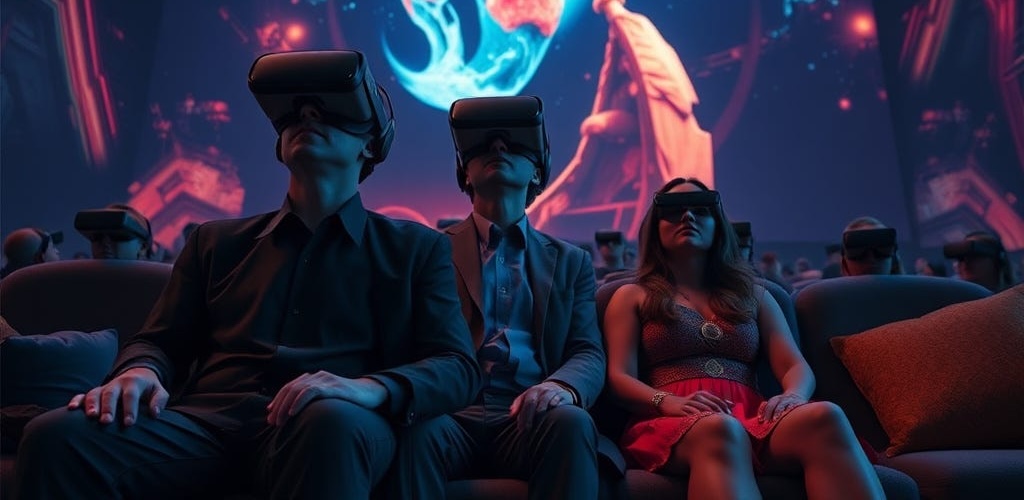
Netflix’s “Unhinged” – Game or Movie?
Which brings me to being unhinged. More precisely, a new game in the horror genre entitled “Unhinged” which has just been unveiled by Netflix and is described as “an immersive horror game that feels a lot like ‘playing’ a show or movie.”
The game’s synopsis explains “You wake up as Ava (voiced by Zoë Kravitz), during an intense storm that knocks out the power. Using your phone as a flashlight and sole lifeline to call and text your best friend Claire (voiced by Sadie Sink) and building super Ben (voiced by Troy Baker), you must find your way to safety…and you’re not alone as you think you are.”
Netflix states “the integration is seamless: moving your real-world phone tracks 1:1 with Ava’s hands in the game, allowing you to guide her flashlight through the shadows.” The game is linked to allow calls and texts received by Ava to come through the gamer‘s own phone and played directly via the TV, keeping the game environment sound and experience intact.
The game has different survival modes. In Story Mode there is no timer, which ensures you cannot die. In Standard Mode, the gamer’s survival depends on their reflexes, and they can virtually die “though instead of a total game over, you’ll simply restart from your last checkpoint.”
Neuroscience reality
Which brings me back to the neuroscience. Horror film is the genre most likely to get a physical and emotional reaction from the viewer; they can literally jump out of their seat with fright. How much more will this happen in an immersive experience? Using VR in games, which makes the gamer or user a participant in a narrative could lead to delusional states. If people ordinarily can get mentally confused and think they are someplace else, then I would have thought it is but a short step to VR prompting equal confusion.
If in a horror VR the gamer is “forced” to attack someone, is it possible that a real person unexpectedly entering the real room could be seized upon as part of the game? If the gamer is so immersed and gets a fright that connects to a traumatic moment of their life, could they be damaged by the virtual experience? If they try to achieve a feat in VR, their bodies remain in a physical space, so what if they leapt from a balcony?
The passive moviegoer watching a movie has real space between them and the screen. This is a reality that, however absorbed they may be in the movie, impinges on the experience. And keeps them hinged. VR removes that and can make them unhinged.
Law unhinged
All of which brings me to the law, which is unhinged. Law all too often is viewed though the rearview mirror, using past cases and written law to examine something that has happened to determine what went wrong and where liability may fall. The pathology of new technology development is that creators create, a check is done by the lawyers on commercial aspects and liability risks, and then the product is shipped out the door. It is once a problem occurs that suddenly people are scrambling around for novel legal answers. And eventually some regulation or other is lobbied for and passed.
The release of the game “Unhinged” should be a flag to lawyers and regulators that VR as it grows in sophistication (by which I mean it taps into the human psyche more convincingly) then the more gamers will need protection. The use of modes of play, determining whether you die in the game or not, may satisfy the legal team, and perhaps an ethics test, but it doesn’t take too much thinking to see where this is all likely to go.
The Road Ahead
We should not wait until it’s too late to look at the law and ethics of virtual reality development, and the neuroscientists and lawyers ought to be thinking through the issues and supporting game creators to build in adequate mechanisms without necessarily spoiling the fun. The law need not be unhinged. The world of virtual reality entertainment means lawyers need to be looking at the virtual road ahead, because all too soon we will find this issue in our rearview mirror after the reality of the first trauma case or VR death.