Every discovery motion in California rises or falls on a document many attorneys treat as an afterthought: the meet and confer declaration. Code of Civil Procedure section 2016.040 requires a declaration stating “facts showing a reasonable and good faith attempt” to informally resolve “each issue presented by the motion.” Judges read these declarations with a practiced eye, and they can immediately tell the difference between a genuine effort and a box-checking exercise. A well-documented effort wins motions and builds credibility with the court; a perfunctory one destroys both. And beginning January 1, 2026, attorneys have an additional obligation. That is to confer on a certified short-hand reporter for the hearing.
Conferring is Substance, Not Form
The good faith standard applies across every major discovery motion — motions to compel further responses to interrogatories (§ 2030.300), requests for production (§ 2031.310), and requests for admission (§ 2033.290), as well as deposition disputes (§ 2025.480). What consistently falls short: a single form letter with no follow-up, vague complaints that “your objections are meritless,” a lone email sent the day before the motion deadline, and correspondence that never identifies which requests are actually in dispute.
What meets the standard is not complicated. Identify each disputed request by number, quoting the text where useful. Explain specifically why each response is deficient. Propose a concrete compromise. Set a reasonable response deadline. Document every contact and follow up every phone call in writing. An honest and detailed exchange satisfies the requirement better than ten obstreperous letters. Judges want to see counsel cut through the noise. A good meet and confer builds credibility and can often avoid a motion all-together. Be creative, understand the others position and be ready to compromise.
Watch the Clock
Missing the statutory windows can forfeit the motion entirely, even after a genuine effort. When responses arrive deficient, confer within five to ten days; the motion to compel further responses must be filed and within 45 days of service of the responses. The parties may agree in writing to extend the 45-day deadline, but that agreement must be memorialized in writing.
AB 711: The CSR Conference
Effective January 1, 2026, there is now a requirement for the meet and confer to include retention of a certified shorthand reporter to report the hearing on the motion. This is separate from the good faith discussion, and omitting it makes the declaration incomplete.
Compliance is simple if you build it in now: add a standing agenda item to every meet and confer communication requesting the other side’s position on a court reporter for any hearing and add the statement to your declaration template. Do not wait for a court to point out the omission and risk either a continuance, or in some cases, possibly a basis to deny the request.
The complete declaration now has six elements: the method of contact (in person, telephone, or videoconference; you can use more than one); the issues presented; the opposing party’s response, including silence; what was resolved; what remains disputed and why it requires court intervention; and the AB 711 reporter statement. After every call, send a confirming email within 24 hours memorializing each agreement, each impasse, and the reporter discussion. An unanswered confirming email becomes evidence of what was said.
When Talking Stalls: The IDC
In Los Angeles Superior Court, an informal discovery conference before the assigned judge (requested through the department or on Form LACIV 094) may be requested before discovery motion briefing is filed, and many disputes resolve in that conversation — or in the hallway outside it. IDC requirements vary by county and by department, so check local rules before making the request. The IDC is a good way to handle a non-responsive opposing party or getting a sense of how the court may decide the issue. Even after a failed IDC, one more attempt to resolve the issues pays dividends: narrow the disputes, propose solutions such as date limits, search terms, or a stipulated protective order, and confirm the court’s informal guidance in writing.
When all else fails and a motion is required, done well, the meet and confer is the foundation of the request and establishes credibility with the court.
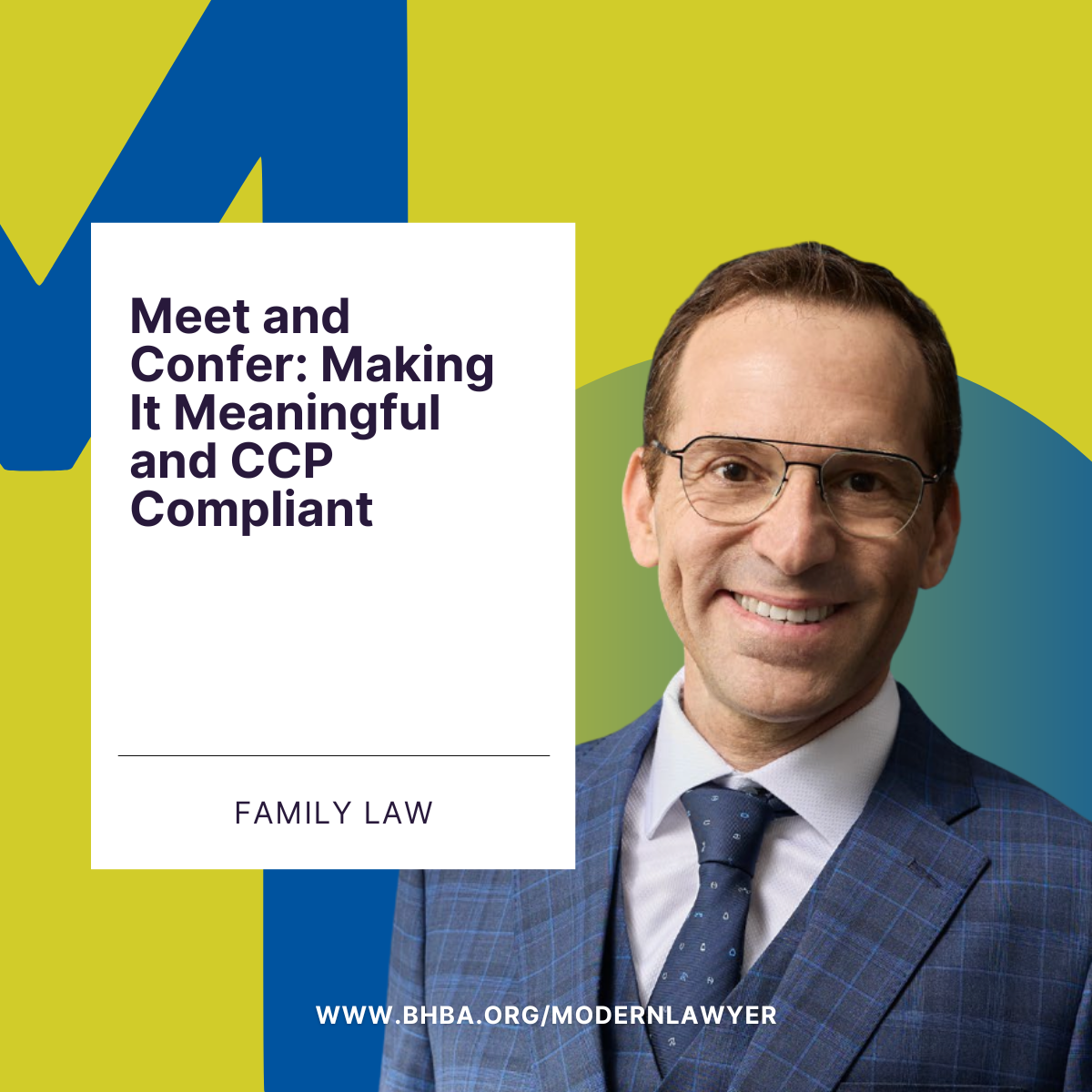
Anthony Storm is a Certified Family Law Specialist and a neutral at Signature Resolution. His experience spans complex dissolution, custody, and high-asset property matters, with a near-perfect settlement record across both litigation and neutral practice.