
Real Property Decisions in Trust and Estate Administration

About this program
When a trust or estate holds real property, the question of whether to sell, retain, lease, or distribute comes up early. It is rarely the decision that matters most. This presentation works through the earlier questions counsel should be raising: the scope of the fiduciary's authority, the duty to investigate a known condition, the status of an occupying beneficiary, and what assumptions a valuation actually rests on. Four case studies ground the analysis, including a beneficiary living in trust property without a lease and a valuation complicated by a configuration that does not match public records. Attendees will leave knowing which unresolved facts change the advice and how to document the reasoning behind a fiduciary decision.
Mark Cianciulli
This OnDemand CLE program earns 1 hour of General credit in California. It aired August 21, 2026 and features Mark Cianciulli, Jennifer McNeil-Lozano, and Laura N. Zolnekoff.



More Trust & Estates Law CLEs

When It Isn’t Just Alzheimer’s: Cognitive Decline, Undue Influence, and Elder Financial Abuse in California Trust and Civil Litigation

Who Owns You When You Die A Deep Dive into Post-Mortem Publicity Rights
How Recent Changes in Probate Laws Impact Your Cases
Mind the Gap: A Tale of Two Exemptions
Diminished Capacity? Part Two: Assessing Expert Testimony on Cognitive Impairmen
2026 – Trust, Probate, & Conservatorship Annual Litigation Update
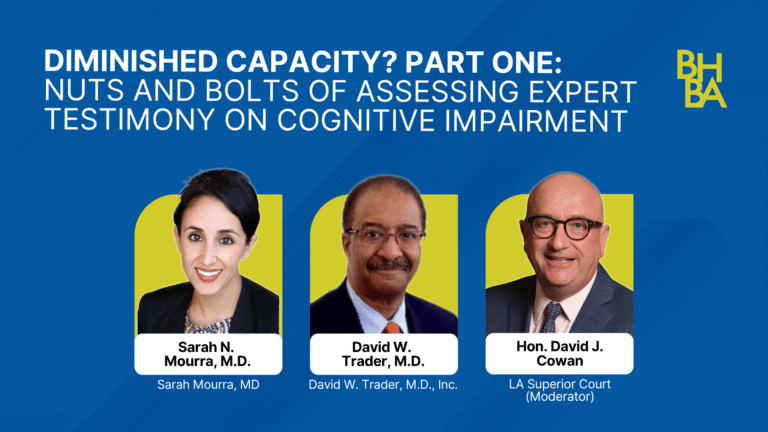
Part 1 – Nuts and Bolts of Assessing Expert Testimony on Cognitive Impairment
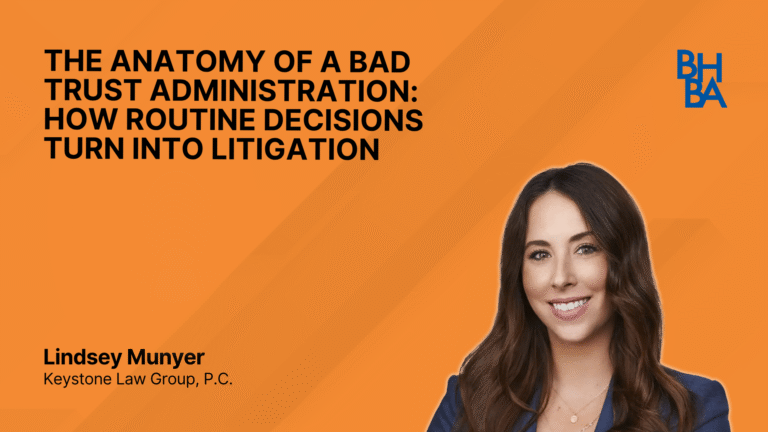
The Anatomy of a Bad Trust Administration: How Routine Decisions Turn Into Litig
Named Best CLE Provider and Best Online CLE Provider by The Recorder in both 2025 and 2026. Built for lawyers, by lawyers, to keep you ahead.




Stream anywhere
Watch on your phone, tablet, or computer, whenever it fits your schedule.
Certificate in minutes
Your certificate is emailed automatically and saved in My BHBA+.
Track your credits
My BHBA+ shows your credits, deadlines, and progress in one place.